

Starfish (a short story)
a never-before published short story

NOTE: I rarely share fiction here, largely because I tend to want to nurture all of my short stories toward publication, but today’s short story felt like something that I wanted to share with all of you.
On August 2, 2018, I drove my wife Katelyn to LAX for her flight to New Orleans. She had a black leather backpack and nothing else; after all, she was only supposed to be gone for the weekend, visiting her mother for Miss Bernadette’s seventieth.
At the Delta Departures she leaned into the open window and kissed me, with tongue. I laughed as I felt the wet poke and said, “Quit that,” which made her laugh, a lovely sound, and then she kissed me again with more decorum before she turned and went inside—the most ordinary thing, the most regular sort of parting between two lovers except when it becomes the last.
According to our Ford Fiesta, it was ninety-two degrees. I drove home in the hellish traffic with a mind on what my responsibilities were to be while Katelyn was gone. A different wife might have undertaken household responsibilities, or at least done the heaping laundry, but I was not of that sort. I worked in a company where the hours were awful but the pay was more than good. My work was to help assess the value of various companies so that they could be bought and sold. The plan, once I’d been hired, was for me to work there for ten years or so and then quit with more than enough money to retire happily alongside—and this, Katelyn happily called herself—my dirtbag wife. My peers at the company were buying Porsches and Teslas, thinking such extravagances made their ulcers worth the trouble, but I kept my head down and my stock portfolio growing. I hadn’t gone South with Katelyn that weekend because I was needed for a complex valuation of three interrelated biomedical companies, but to be fair, I was glad to be absent from the Giroirs’ family festivities. Katelyn’s family was loud, and grew steadily louder as the booze flowed more steadily apace, which made me want to hide in the bathroom with my phone and a book, the way I had with my own noisy family when I was a teen. Katelyn and I had grown accustomed to one another’s rhythms, but once home with her kin, her extraversion flourished; I easily lost her to a shouting match about this or that, and there was also the matter of her sister, Billie, with whom I’d never properly bonded.
So staying home was what I chose to do. I drove away from the airport and from Katelyn, fully expecting that I’d see her again. And due to fate, or hubris, or the random fucking dice-roll of the universe, she was struck by a car while venturing out to purchase butter for the birthday cake. In my mind, I can see the parabola of her body. I can see the passersby leaping into action, pointlessly, as my Katelyn collided onto the dark street, never saying a word, never making a sound.
I’d never fully grieved anyone prior to losing Katelyn, and the force of my devastation terrified me as I felt myself chopped off at the knees and then the neck, losing any sense of my surroundings and myself. I lost too much weight, which caused one of my biohacking coworkers to come to our apartment with five pallets of Soylent in the back of his hulking brother’s truck. The only flavor I liked was Chai Latte and as it turned out, it gave me the cramping runs, but I lacked the capacity to do anything but suck down a bottle for every meal.
I didn’t go to work. No one wanted to fire the miserable widow, “but if it were anyone else...” I deleted that particular email; I had enough money to survive. I exercised on a Pelaton bike that lived in the basement of the duplex, not knowing who it belonged to but assuming they’d kick up the proper fuss if I wasn’t supposed to ride it. Exercise, as it turned out, was the only thing that I could properly do. Neither Katelyn nor I had previously been interested in moving our bodies for no discernible purpose, but now I had one. A chirpy Brit named Brigette encouraged me to go up hills and through lush valleys. Brigette told me that I was doing spectacularly. I was grateful for Brigette, the only person who behaved as though everything was normal. Without Brigette, without Katelyn, there was no reason to move at all.
One-and-a-half months after Katelyn died, I took out the garbage in my bare feet and lo: there stood Katelyn on the sidewalk, with her dusty backpack on the ground.
Katelyn was the kind of girl—well, woman—who attracted looks regardless of how reckless she was with hygiene or attire, due to the privilege of her white body and its collapsible thinness. Her physical form, five-foot-eight, wielded power in Los Feliz even as she strutted by bona fide movie stars, insouciantly wearing a stringy ponytail pulled through a backwards baseball cap, her tortoiseshell glasses perched high on her tomboy, un-patrician face. She wore utilitarian black bras exposed beneath tattered muscle tees; she had a mole below her left armpit of the sort that we call identifying marks. By the time the car struck her, we’d been together for six years and I loved her more than anything or anyone. I couldn’t imagine living without her—living without my luminous sweetheart, my hilarious wife who could make me dampen just by peering through her lashes over a loosie as she licked the paper with a wry smile, swamp-green eyes on mine. And there she was—she wore the same backwards baseball cap she’d worn the day we parted, and the same black bra and ratty top.
Immediately I assumed I’d gone insane. It was bound to happen—perhaps this lunacy was a hallucination, brought on by scurvy. Yet when I stood there, the dumpster lid slamming shut, the vision of Katelyn, instead of disappearing, stared back at me with an expression of annoyance that I’d missed so much—her arm flinging out as if to say, What the fuck, June?
I stared. She started walking toward the car, which was parked curbside a few yards away, yammering: “I’m going to be late. Where have you been? You know it stresses me out when I don’t have enough time to get through security.” And then, in alarm: “Why are you crying? What’s wrong?”
But I couldn’t stop, as much as I tried. I’d never been a big crier—hadn’t been since I started taking Zoloft for anxiety—and she knew that I must be experiencing something catastrophic to be falling apart the way I was. I thought of the month that had just passed without her, and how she was here, now, though I also knew it was impossible for her to remain with me forever in her current state, whatever that was. Even if I were insane, or somehow asleep, our togetherness was bound to end soon, and this I couldn’t bear. And, too, I thought of telling her of our present circumstance. Katelyn, my love, you are dead, I’d say. But this seemed inadvisable.
“It’s nothing,” I said, walking toward the car, wiping my eyes. “Get in.”
Katelyn pulled open the door and got in, plopping her backpack in the rear seat. She put her sneakered feet up on the dashboard. All of these things that I would have once found annoying, I now found unbearably tender. I did notice that her feet left dirt marks on the plastic—if she was a ghost, which seemed to be the only explanation for our circumstance, Katelyn was a corporeal one. (Her ankles! Her beautiful, pink ankles.)
“I don’t think you should drive,” Katelyn said as I started the ignition. “You’re upset. You’re in no state to drive.”
“No,” I said. I drove down the street, still weeping—I wanted so badly to touch her; I was afraid to touch her. The last time I’d felt her skin on mine was in the Charbonnet-Labat-Glapion Funeral Home, when I brushed my fingers against her cold, waxen forehead and tried not to let my legs loosen completely beneath me. I was under the impression that I couldn’t let her drive the car. It seemed dangerous, somehow.
“Do you think I’ll make my flight?” she asked.
“Yes.” I didn’t bother looking at the clock. I didn’t know under what logic Katelyn’s apparition worked, but figured that Delta’s timetable didn’t have much to do with it. “How are you feeling?”
“I don’t know. Okay.” She gnawed on one of her cuticles. “Mom’s been excited about having me home. It’ll be good to see Billie, too. I think she needs to leave New Orleans.”
Billie was adopted. Equally stunning, as if whoever had delivered her unto the family had realized the sisters would need to be so. Billie was a Chinese adoptee, and I felt—as a Chinese-American, myself—that it couldn’t have been easy for her, though she’d never said so or hinted as much. I’d tried to stay in touch, but she had a fantastic social life and was difficult to get a hold of; when I was in town for the funeral, Billie had been busy on every day but the day of the burial itself. Looking over at Katelyn now, I wanted to tell her about how it had gone. Yet there was no good way to tell her stories about her own funeral.
The road unspooled. The traffic started and stopped, slowing us down at its usual infuriating rate. There were three things of which I was fairly sure. First: I didn’t know why or how Katelyn had come back to me, but I was sure that if I dropped her off at the airport, I’d never see her again. Second: she seemed not to know that she was dead. Third: she seemed determined to make the trip to her mother’s birthday celebration. So I evaluated my options. I could continue driving her in circles—I had half a tank of gas, which would get us pretty far even in L.A. traffic—but we couldn’t live in the car forever, and even with her awful sense of direction, she’d know that I was trying to pull one over on her, even if she wouldn’t know why.
“You’re quiet,” Katelyn said.
“I’m just thinking.”
“You gonna miss me?” she teased.
A hard lump formed in my throat; my eyes needled with tears. I nodded. I reached out and grabbed her cool left ankle, my tears flowing as I felt the skin and muscle and bone beneath my hand. And then I went momentarily insane; I suddenly turned the car off the road and into a strip mall parking lot. The car slammed to a stop. I put on the parking brake. Katelyn shrieked as I threw my body over the center console and kissed her, pawing at her collarbone. Everything in my mind was static.
She tried to wriggle out from underneath me. I think she loudly repeated my name. I stopped. Taking my wrists in her hands, she said, “Jesus, June! I need to go! I need to get to the airport.”
Mortified, I said, “I’m sorry,” and climbed back into the driver’s seat.
A few minutes later, she laughed. “I mean, I’ll be back after the weekend, okay? Two days without you; I’m really going to want you then.” She rolled down the window. “You sap.”
We drove and drove and I looked at how much gas we had, which was not much, and I didn’t want to fight. If Katelyn was only going to be around for a brief amount of time, I wanted it to be pleasant. I turned on the radio and over the speakers came a John Prine song that was halfway through. I didn’t know the words, but Katelyn softly sang along, and next came Patsy Cline with “Crazy,” which we sang in chorus though there was a burr prickling my throat. So many times we’d traveled various roads together as a way of getting from A to B. I was the urgent one between us, miserable in traffic—I’d rather take the long way rather than drag for ages behind another car, whereas Katelyn never minded the time in the passenger seat. Of course, now I regretted every moment I’d rushed through our time together—I should have savored it all.
I said, “I’m coming with you,” as I took the next freeway exit.
“You don’t have a ticket,” she said, but I could tell that she was pleased. A spangle of light zipped through the back of my skull: she’d wanted me to come to New Orleans all along.
“I’ll get a ticket.”
“You think you’ll be able to get one?”
“I’m sure I’ll be able to get one.”
She clapped her hands like a child. Alors.
The sun was red, drooping, and ready to pop as I pulled up to the curb in front of Terminal A, Departures. I got out of my side and opened the door for Katelyn as she leaned back to grab her backpack. I held her hand like I had a million times before, following her loping lead as we walked away from the car.
“What? You’re leaving the car?” she asked.
“I just want to make sure I can get a ticket,” I said.
“But someone’s going to tow the car.”
“No one’s going to tow the car.”
I was certain of this. I was certain, in part, because it wasn’t really Katelyn who was with me, but some kind of whimsical phantom. For example, I could tell that her black backpack, which in real life had heaved with her things, was empty. Or, for another, the real Katelyn, as silly as she was, would never let me leave our car at the curb of the airport to follow her into the Departures area of the Delta zone at LAX. But it was a gift to be near her, this thing, and I was grateful.
Right before we crossed into the airport, I kissed her, with tongue.
“Slut,” she laughed.
And then she was gone. I looked around, but she had disappeared into a million fragments and no one had noticed, or she had gotten lost in the crowd, or she had melted into the floor, or—
She was gone after that.
I didn’t understand what had come to pass on our last drive to the airport, no matter how many times I turned it over in my mind, and I did turn it over and over in my mind obsessively until it lost all of its color. All I cared about was that I’d gotten to be with Katelyn again, which felt like a holy miracle the likes of which I did not believe.
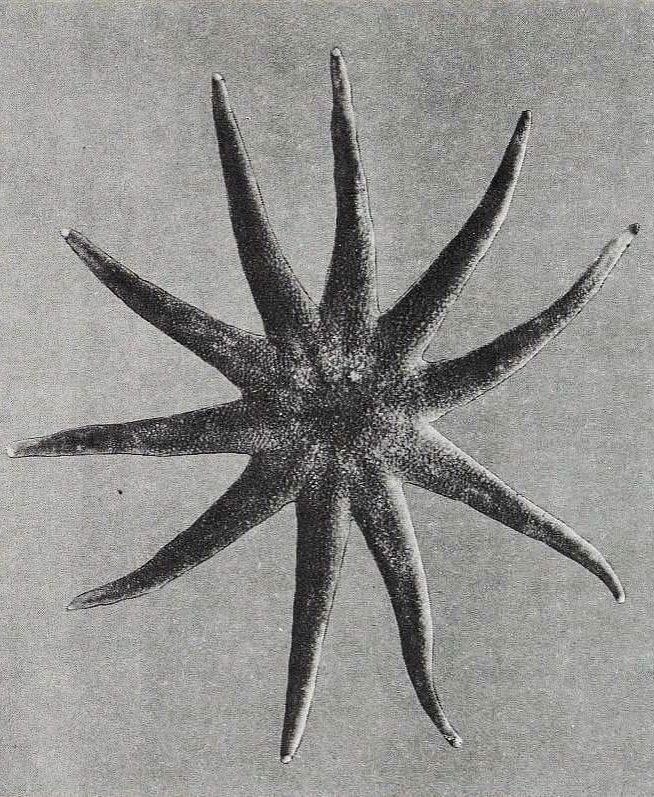
I never told Miss Bernadette about seeing her ghost. I didn’t tell Billie, though Billie did start to send me Christmas cards, and then the birth announcement of her first child. I eventually started dating an older Filipina-American woman who didn’t remind me of Katelyn at all, because I couldn’t bear it—to love someone like her, when Katelyn herself is gone forever. I met Maricel at work. She’s a numbers person, and I gravitated toward her immediately. It’s not easy to meet other women in that job, let alone other queer women. I often worry that Maricel will die, or leave me in some other way; it sounds like a pathology, but everyone will leave us eventually. We can be like starfish, regenerating lost arms.

Evening has a way of telling the truth.
Not loudly, not with pressure—just a quiet reckoning with what you’ve carried through the day, and what you can’t keep postponing.
If you’re reading this now, chances are your writing has been tugging at you again.
Not the guilt, not the comparison—just the deeper knowing that your work deserves a structure worthy of its weight.
The Complete Writer’s Ecosystem Bundle was built for exactly this moment.
It gathers every tool you need to create a sustainable, professional writing practice within your limitations:
🌱 3 months inside the Academy
🌱 Writing Through Brain Fog
🌱 The Cell Method
🌱 The Gentle Persistence Collection
🌱 A private Magic Session to tailor everything to your body, brain, and manuscript
The full value is $1,361.
Until midnight: $897 (save $464).
This exact configuration is new—but writers who’ve worked with these individual pieces have gone on to secure agents, publish widely, and finish manuscripts abandoned for years.
There’s power in gathering the right tools.
There’s even more power in gathering them at the right time.
Tonight is that time.
If you know your writing deserves a complete, coherent system—one that will still be standing on the days your energy won’t—this is your last window.
So loving, so touching. To have such a love is rare - and to have it ripped away totally unfair - saddens me immensely when people living a loving life have fate throw a wrench in the works.
Love a good ghost story that’s not about instilling fear, but love and hope. Thank you.