


Whether you’re a free subscriber or a paid subscriber, sign up to get access to the newsletter via email and the Substack app. Never miss an update. 💌 Don’t want to miss out on my paywalled essays, occasional Fireside Chats, and library of resources? Make sure to upgrade to a paid subscription. I also offer comped subscriptions if you’re in financial need; just email info@esmewang.com with your preferred email address and a little bit about yourself (as much or as little as you want; I like to know who’s reading my work if possible). And if you can afford to sponsor a paid subscription for someone else, please consider doing so.
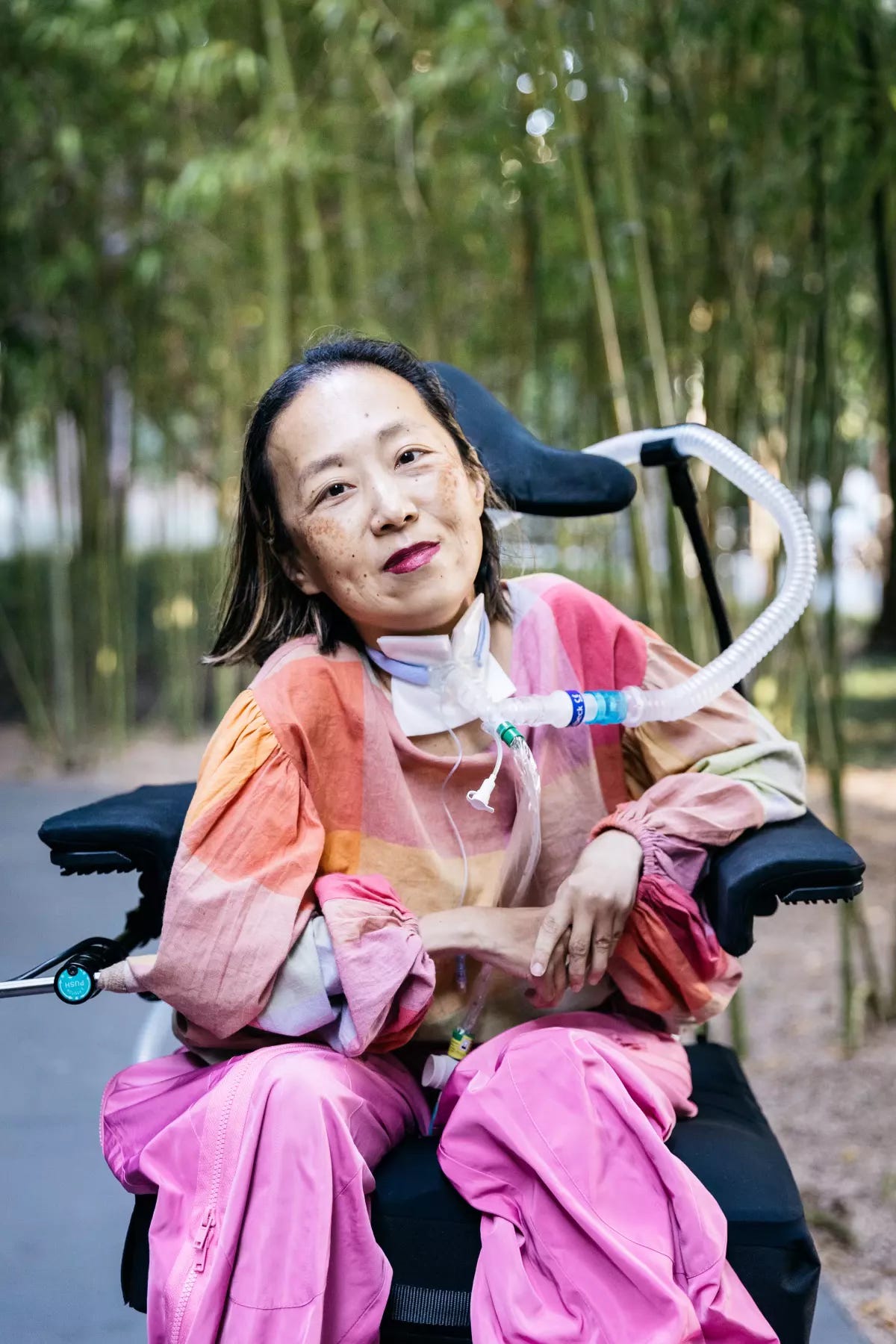
Alice Wong, a brilliant, fierce, and disabled activist, as well as a peer and friend, passed away in November, leaving behind an enormous hole where her determined spirit once sat.* She was 51 years old, a MacArthur “Genius” Award recipient, and the founder of the Disability Visibility Project. In her final message, shared by her friend Sandy Ho at the moment of her passing, she wrote: “Don’t let the bastards grind you down.”
That was Alice. Right until the end.
I was surprised to learn that before she died, she had left behind a wish list of classes to be taught at the San Francisco Disability Cultural Center—a publicly funded building and organization to bolster and support disabled people in San Francisco, and that the list of requested classes included mine. This request, passed on to me by those designated to carry out her last wishes, has had me thinking about what it means to leave a legacy, and what it means when that legacy extends far beyond yourself.
Because I used to think a lot about legacy. Recently, the legacy part fell off because it seemed too egotistical. Ambition has become less of a focus of mine; legacy has too.
Legacy reminds me of stuffy museums full of artifacts commissioned by the rich, or artifacts from other cultures thieved by imperialistic ones, or art created by people who weren’t rich in their own right but were the right kind of people to be chosen for patronage. Because of that slippery shift in the word’s meaning, legacy carries a different weight than it did for me a decade ago.
But after receiving this request from Alice beyond the grave, I’ve been thinking about legacy again. Namely, the fact that legacy doesn’t have to do with just one of us. It has to do with the collective. Or at least, if you do it right—as Alice did—it means so much more than the one person and what the one person did.
One aspect of Alice that people know up top: she was recently awarded the MacArthur Genius Grant. I feel this to be an absolutely correct choice by the MacArthur Foundation. One of the aspects of her genius was to look forward—to use what my disabled therapist has taught me to think of as “cathedral thinking.”
